
Total: ₹0.00
Taxes and shipping calculated at checkout

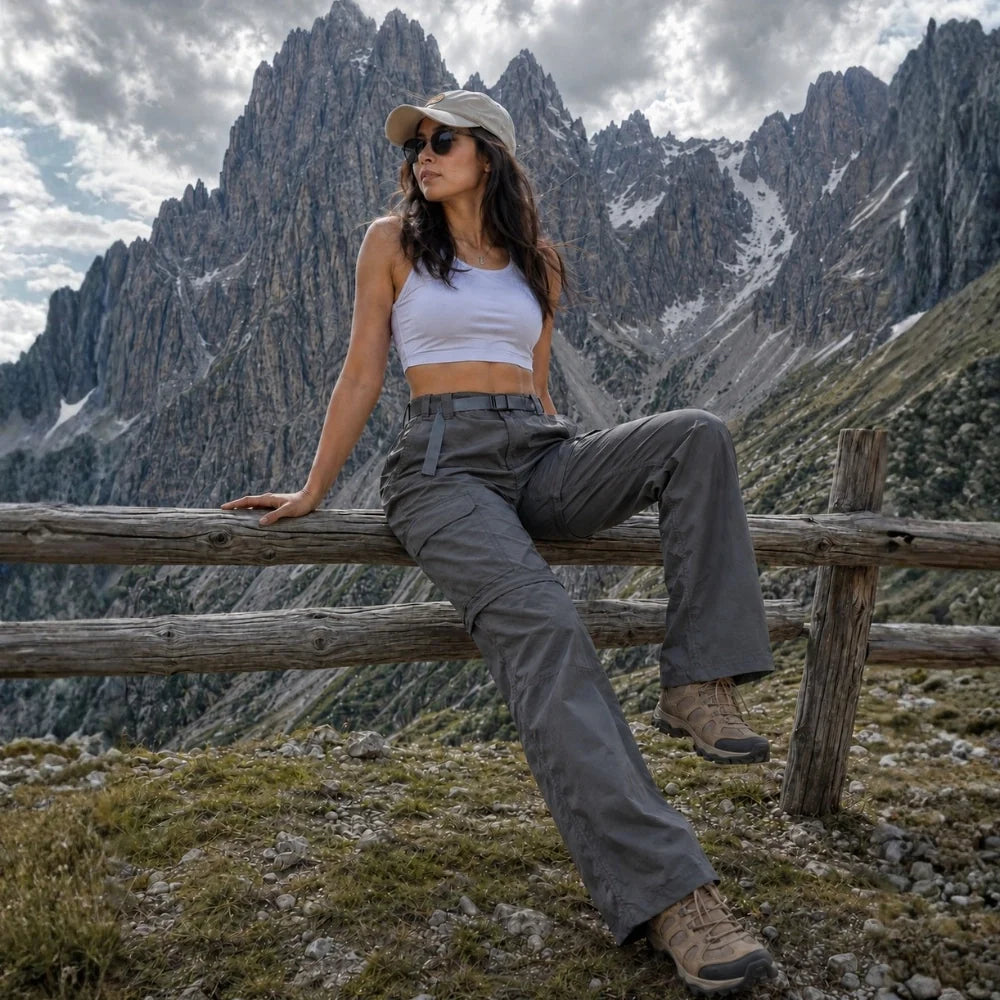
Most trekking pants for women in India are men’s patterns cut smaller. That is why the waist gapes while the hips pull tight, and why so many women end up cinching a belt over a pant that was never shaped for them.
It matters more every year. Indiahikes reported in 2022 that around 35% of their trekkers were women, and that women applicants had quadrupled over five years.
Eddie Bauer India makes technical outdoor apparel for Indian conditions, including the Women’s Switchback Convertible Cargo Pant, a ripstop polyester trekking pant with UPF 50 and zip off legs. Here are seven things to check before you buy, whoever makes them.

Four things: it dries fast, it moves with you, it resists abrasion, and it holds what you put in its pockets. Jeans and cotton track pants fail all four, and drying speed is the one people underrate. Water pulls heat from the body roughly 25 times faster than air, and wet clothing increases conductive heat loss about fivefold, according to Princeton’s Outdoor Action guide to hypothermia. On a cold descent, a soaked fabric is a safety problem, not a comfort one.
Polyester and nylon over cotton, every time. Cotton holds water against your skin for hours. Synthetics shed it.
Look for ripstop too. The faint grid in the weave is a reinforcing thread that stops a snag from running into a tear. The Switchback is 100% polyester ripstop. For the longer argument, read quick-dry vs cotton for trekking.
Here is the problem nobody writes about. Women’s hips are generally proportionally wider relative to the waist, so a pant sized to fit your hips gaps at the back of the waistband. A fixed button waist cannot close that. An elastic drawstring waist can, which is why it is worth looking for.
Test it before the tags come off. Do a full squat, then pull one knee to your chest. If the crotch binds or the waistband slides, the pant is wrong however good the fabric is. Rise matters too: a low rise sits under a hipbelt and rubs.
Two kinds exist and they are not equal. A DWR coating sits on the surface and wears off in the wash, so it needs re-treating every few months. Water resistance built into the fabric does not. The Switchback’s is inherent rather than a coating.
Water resistant is not waterproof, though. Neither type keeps you dry through sustained monsoon rain without a shell.
UPF 50 means the fabric is rated to block around 98% of ultraviolet radiation, far more than a typical summer t-shirt. It matters more with altitude: the World Health Organization states that UV levels rise by approximately 10% for every 1,000 metres of elevation. On a Himalayan trail you take considerably more UV than at sea level, and your legs are the one place sunscreen rarely gets reapplied. A UPF rated fabric handles that for you.
Count is the least useful number on the label. Closure and placement decide whether a pocket works.
A zip pocket keeps a phone in place on a scramble. An open hip pocket does not. And a pocket under a loaded hipbelt is one you will not open all day. The Switchback has six: two slant hip, two front cargo with one zip close and one flap close, and two at the back.
The case for zip offs is narrow but real. They earn their place on treks that start at 4am in the cold and finish in afternoon heat, and on routes with river crossings.
They are heavier, and the seam zip sits across the thigh where some people find it rubs. There is a second reason women choose them that gear guides rarely mention: full coverage when you want it, through a village or on a busy trail, with the option to remove the legs when you do not. More in whether convertible trekking pants are worth it.
Trek pants in India run from roughly ₹400 to ₹4,000 at the large outdoor retailers. A respected Indian trekking source advises that anything over ₹2,500 is not worth the extra money, and for many trekkers that is sound.
The honest version: below ₹2,500 you can get a good quick-dry pant that handles most single day treks in fair weather. Above it you are paying for ripstop over a plain weave, water resistance in the fibre rather than a coating that washes out, a tested UPF rating, and zips that last. Trek twice a year in good weather and the cheaper pant is the right call.
| Where you are trekking | What matters most |
|---|---|
| Sahyadri monsoon | Drying speed above all else. Accept that you will get wet |
| Himalayan summer | UPF 50, breathability, zip off legs for warm afternoons |
| Himalayan winter | Room to layer over a base layer, wind resistance, full length |
| Western Ghats and south Indian forest | Quick dry, abrasion resistance, closed pockets |
The Women’s Switchback Convertible Cargo Pant is ₹5,499: 100% polyester ripstop with UPF 50, water resistance built into the fabric, six pockets, an elastic drawstring waist, an ankle drawcord, and legs that zip off into a cargo pocket. Sizes 28 to 34.
Who it is not for: if you trek once a year in fair weather, a ₹1,500 pant will serve you well.

What should women look for in trekking pants? Fit first, then fabric, then weather protection. Look for an elastic or drawstring waist that closes the gap at the back, a quick-drying polyester or nylon fabric, and a UPF rating if you trek at altitude. Check fit with a full squat before buying.
Should trekking pants be tight or loose for women? Comfortable at the waist and hips with full freedom of movement, not loose. A baggy pant catches on rocks and bunches under a harness.
Are convertible trekking pants worth it for women? Yes if your trek has a big temperature swing, or river crossings. No for one short trek in settled weather.
Can I wear leggings instead? On a short, dry, warm trail, yes. Leggings give almost no abrasion resistance, no usable pockets and no sun protection rating, so they are poor for scrambling, cold weather or multi-day routes.
How much should I spend on trekking pants in India? ₹1,500 to ₹2,500 covers most single day treks in fair weather. More buys ripstop, built-in water resistance, a UPF rating and better zips.
What size should I buy? Measure your waist and hips against the size chart rather than guessing from your jeans size. Outdoor sizing varies between brands.
Fit decides whether you wear the pant again. Fabric decides whether it keeps you safe. The pockets, zips and UPF number are refinements on those two.
Work out where you trek and how often, then buy for that. To compare trekking pants for women, browse trekking cargo pants for women or all women’s outdoor bottoms.

Etiam vel magna sed leo feugiat cursus. Cras mollis blandit dolor. Praesent vulputate justo quis volutpat pharetra. Suspendisse


There is nothing in your cart lets add some items.


Subtotal ₹0.00
Shipping Charges Calculated on checkout


